QSAR Models
Harnessing computational power to reduce animal testing and accelerate chemical safety assessment.
What is QSAR?
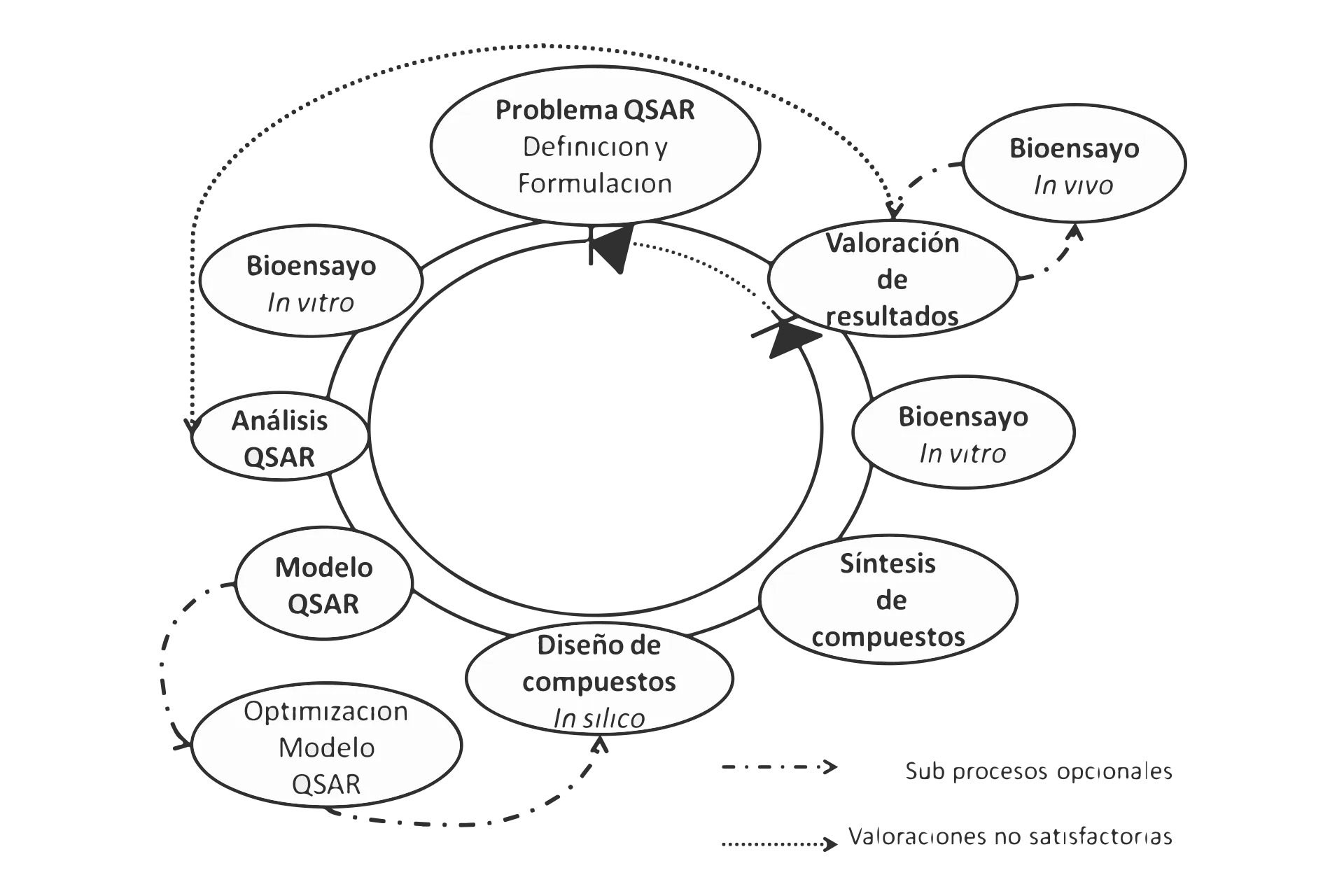
QSAR (Quantitative Structure-Activity Relationship) models are regression or classification models that can be used to predict physicochemical, toxicological and environmental destination properties of substances.
These models establish mathematical relationships between the chemical structure of a compound and its biological effects or physicochemical properties, allowing the prediction of the behavior of substances without the need for experimental trials.
Data generated by QSAR models have applications in chemical and pharmaceutical sectors (REACH, biocides, cosmetics, plant protection products) or for screening substance properties.
Benefits of QSAR
Advantages of using computational prediction methods
Cost Reduction
QSAR models can significantly reduce costs associated with experimental trials, allowing resources to be allocated to other critical areas.
Time Saving
Computational prediction allows results to be obtained in much less time than traditional trials, accelerating product development.
Animal Welfare
QSAR contributes to reducing the use of experimental animals, aligning with ethical principles and international directives.
Regulatory Framework
REACH
Annex XI explicitly allows the use of (Q)SARs for substance registration when results are derived from a scientifically valid model and are suitable for classification and risk assessment.
Cosmetics
The 7th Amendment has been a significant driver, prohibiting animal testing for cosmetic products and ingredients in the EU.
Pharmaceutical Sector
ICH M7 and the control of mutagenic impurities suggest the use of QSARs as a first step in assessment to limit potential carcinogenic risk.
Our QSAR Services
Property Prediction
- Physicochemical properties prediction
- Toxicological parameters
- Environmental destination properties
- Pharmaceutical impurity screening
Read-Across and Categorization
- Identification of structural analogs
- Development of robust chemical categories
- Preparation of justification reports for authorities
- Compliance documentation
Specialized Training
REACH Monitor co-organizes the only official training for the OECD QSAR Toolbox tool.
- Practical courses on Toolbox usage
- International official certification
- Custom workshops for technical teams